"You are not pretty," i tell my reflection. "You are just different. The kind of different that no one likes. The kind of different that scares and intimidates people." My reflection pauses for a moment. She smiles with kind eyes, forgiving my insult. "You are everything," she tells me. "You are the sun, the moon and everything in between. You are a scorching hot fire, yet you are cold spring water. You are good and bad. You are you and I am, too. But most of all, you are human. Just like anyone else." - Untitled #1 by nataliemoo on Hello Poetry c.2015
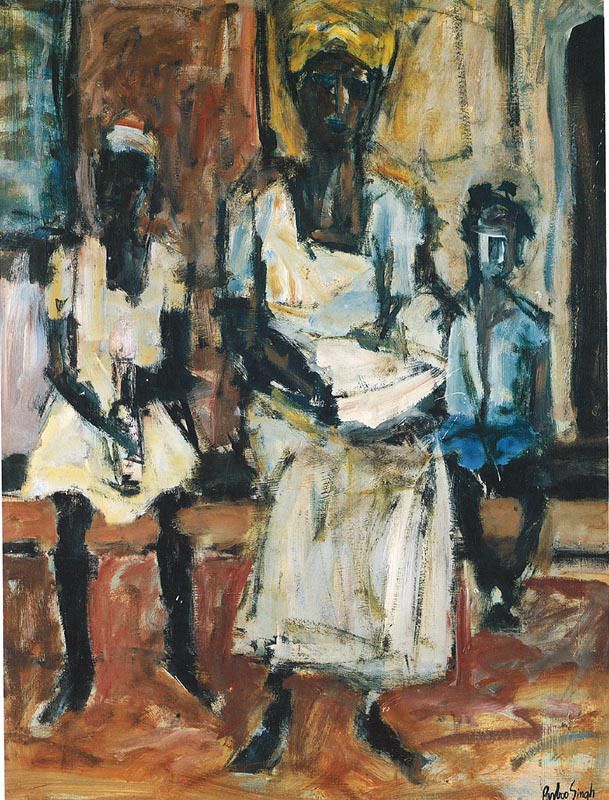
Independence does not erase expectation. It simply changes who delivers it.
In the decades after colonial rule, people are encouraged to reinvent themselves while still remaining recognizable to family, community, religion, and tradition. A person is expected to move forward without abandoning what they've been taught by their former rulers.
Success matters, but so does loyalty. Confidence matters, but humility matters too. Identity becomes something constantly negotiated between personal desire and public perception.
Most people learn to adapt because adaptation is rewarded. These compromises often begin as practical decisions. Small adjustments. Temporary performances. Over time, they settle into routine. People become fluent in presenting acceptable versions of themselves depending on who is watching.
Society rarely demands transformation directly. More often it encourages it through approval. Through opportunity. Through the relief of belonging.
There is pressure here to appear resilient even while carrying inherited grief. People celebrate survival so often that exhaustion itself can begin to feel shameful. A person learns to smile through discomfort because everyone around them is trying to prove they can outlast hardship too.
But there are always people who resist reshaping themselves completely.
Refusal creates distance. Communities built on familiarity can become suspicious of those who stop performing correctly. Relationships strain quietly. Invitations disappear gradually. A person may remain surrounded by others and still feel separate from them.
Still, there is a kind of dignity in remaining visible to yourself.
Yet isolation changes people too. Defiance can become loneliness disguised as principle. Pride can harden into separation. There are moments when conformity feels less like surrender and more like rest; a chance to stop explaining yourself to a world that keeps asking for revision.
You will move through neighborhoods alive with music and argument, through churches, markets, classrooms, taxis, dance halls, and homes where expectations pass between generations as naturally as conversation. Everywhere, people are balancing authenticity against acceptance.
Sometimes belonging feels beautiful precisely because it asks so much from people. Shared music, shared language, shared memory, shared struggle. To reject conformity entirely can also mean rejecting the comfort of being recognized by others who survived the same histories you did.
And beneath every decision sits the same quiet uncertainty:
Is belonging worth the parts of yourself you must soften to achieve it or is solitude easier to bear than becoming someone designed for other peoples approval?
Will you follow His will
or choose not to obey?
Image Credit: "Jamaican Gothic" by Karl Parboosingh c.1966. Sourced from Pinterest.